Prefab ADU vs Stick Built ADU: Total Cost Breakdown (2026 Guide)
Reading time: 14 minutes
You’ve got the lot space. Maybe a detached garage that’s collecting dust, a generous backyard, or a side yard that’s been sitting idle for years. An Accessory Dwelling Unit (ADU) sounds like the obvious next move — extra rental income, multigenerational housing, or a long-term property value boost. But then comes the question that stops almost every homeowner in their tracks:
Should I go prefab or stick-built?
It’s not a simple choice. In 2026, with construction labor costs continuing to climb and factory-built housing technology reaching new levels of sophistication, the gap between these two approaches is more nuanced than ever. Some homeowners save $40,000–$80,000 going prefab. Others end up spending more than stick-built after hidden site costs eat into their budget. The difference? Understanding what each path actually costs — not just the sticker price.
This guide breaks down every cost layer of both approaches so you can make a decision based on real numbers, not marketing brochures.
Table of Contents
- Defining the Two Paths: Prefab vs Stick-Built ADUs
- Full Cost Overview: Where the Money Actually Goes
- Prefab ADU Total Cost Breakdown
- Stick-Built ADU Total Cost Breakdown
- Side-by-Side Comparison Table
- The Hidden Costs Nobody Talks About
- Real-World Case Studies (2025–2026)
- Cost Distribution Visualization
- 3 Common Cost Challenges and How to Overcome Them
- Frequently Asked Questions
- Your ADU Decision Roadmap
Defining the Two Paths: Prefab vs Stick-Built ADUs
Before diving into dollars, let’s establish clear definitions — because “prefab” in 2026 covers a much wider spectrum than it did even five years ago.
What Is a Prefab ADU?
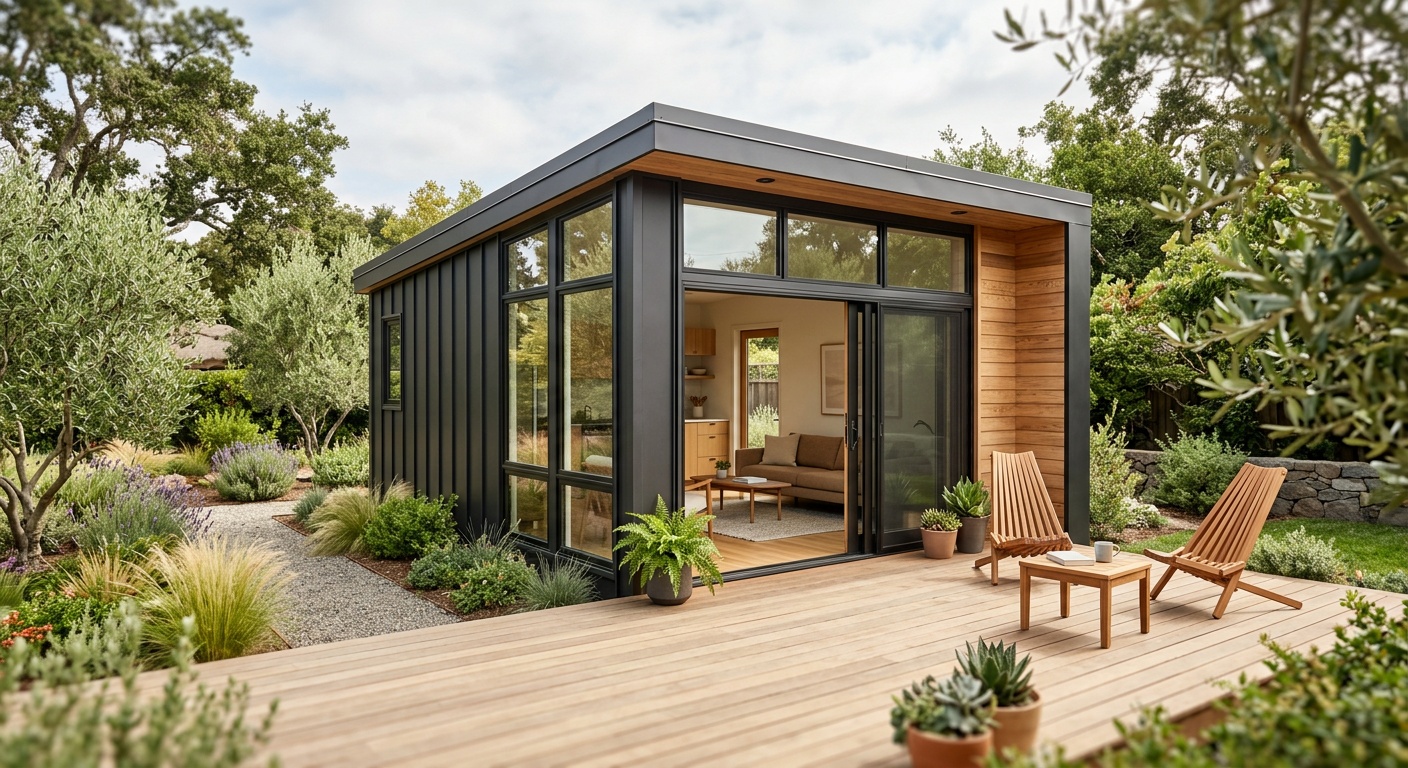
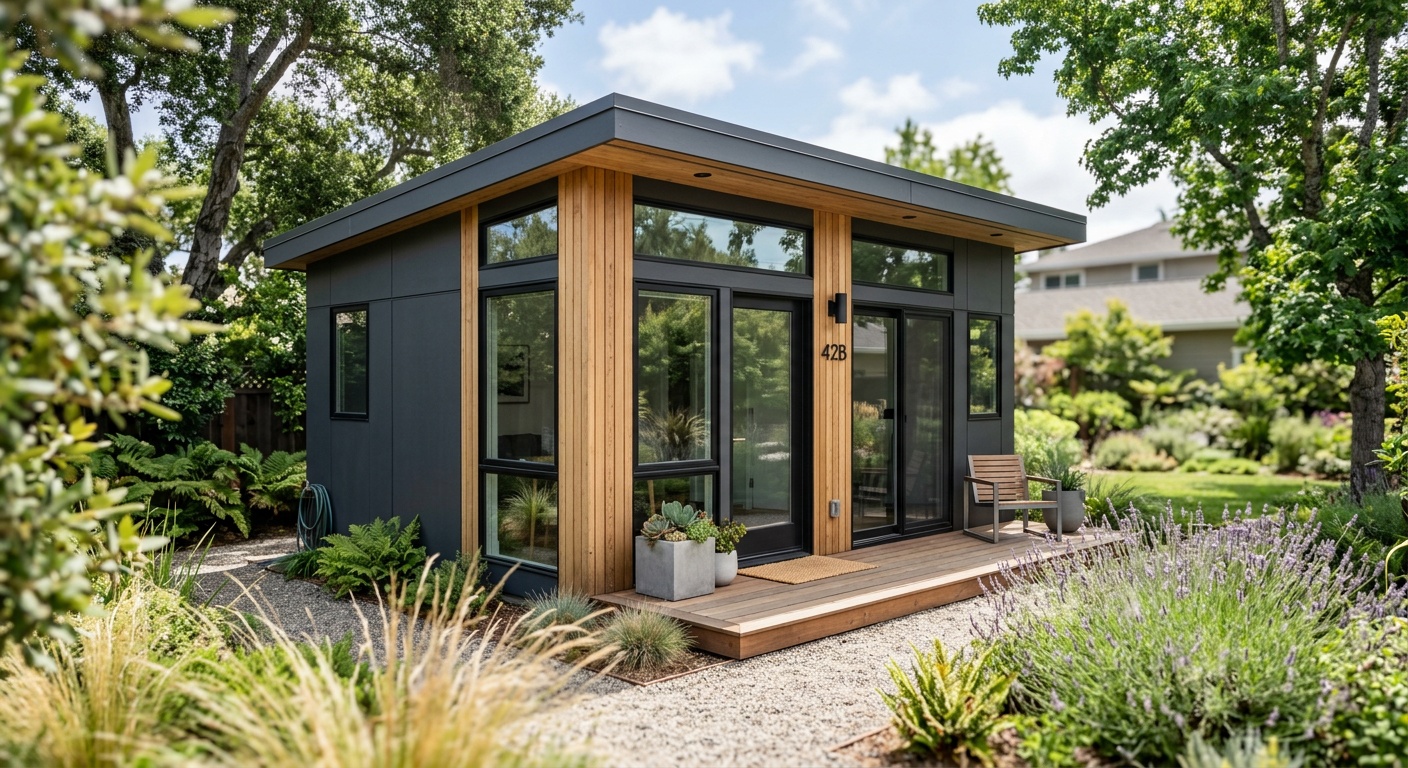
A prefab (prefabricated) ADU is built primarily off-site in a controlled factory environment, then transported and assembled on your property. This broad category includes several sub-types:
- Modular ADUs: Built in sections (modules) that are craned onto a foundation and connected on-site. These meet the same local building codes as stick-built homes.
- Panelized ADUs: Wall panels, roof panels, and floor systems are pre-built and shipped flat, then assembled on-site like a precision kit.
- Manufactured/HUD-code ADUs: Built to federal HUD standards rather than local codes — limited in where they’re permitted but the most affordable option.
- Container ADUs: Shipping container conversions — trendy, but heavily regulated in most jurisdictions.
In 2026, companies like Dvele, Abodu, Cover, and Mighty Buildings have pushed modular ADU quality to impressive levels, with some units achieving Passive House certification from the factory floor.
What Is a Stick-Built ADU?
A stick-built (or site-built) ADU is constructed entirely on your property using traditional framing methods — wood studs, joists, and rafters assembled piece by piece by an on-site crew. This is the conventional construction method that’s been standard in residential building for over a century. Every element — framing, plumbing rough-in, electrical, insulation, drywall — is completed sequentially on your lot.
Stick-built ADUs offer maximum design flexibility and can be tailored precisely to your lot’s unique constraints, but they’re fully exposed to labor market volatility, weather delays, and supply chain disruptions.
Full Cost Overview: Where the Money Actually Goes
Here’s what most ADU cost estimates miss: the build cost is only one slice of the total investment. Whether you go prefab or stick-built, your total ADU project cost includes these categories:
- Design and architecture fees
- Permits and development fees
- Site preparation and grading
- Foundation work
- Utility connections (water, sewer, electrical, gas)
- The structure itself (materials + labor)
- Interior finishes and appliances
- Landscaping and exterior restoration
- Financing costs
- Contingency buffer
The structure itself is where prefab shows the most savings. But site-related costs — foundation, utilities, permits — apply to both approaches equally, and that’s where many homeowners get a budget shock.
In high-cost metros like Los Angeles, San Francisco, Seattle, and New York in 2026, total ADU projects range from $180,000 to $500,000+ depending on size, site conditions, and finishes. In mid-cost markets like Phoenix, Denver, Atlanta, and Austin, the range runs $120,000 to $320,000. Rural and lower-cost markets can dip to $90,000–$180,000.
Prefab ADU Total Cost Breakdown
Unit Cost: The Factory Price Tag
The base factory cost for a quality modular or panelized ADU in 2026 typically runs:
- 400–600 sq ft (studio/1-bed): $90,000–$160,000 for the unit itself
- 600–800 sq ft (1–2 bed): $140,000–$220,000 for the unit
- 800–1,200 sq ft (2–3 bed): $200,000–$320,000 for the unit
These figures come from 2026 pricing from major prefab ADU providers and represent units with standard mid-range finishes. Budget units from manufacturers like Cavco or smaller regional players can be lower, while design-forward brands like Dvele or Cover command a premium.
Delivery and Crane Costs
This is often the first surprise. Transporting a modular unit requires wide-load trucking — typically $2,500–$8,000 for delivery within 200 miles. Setting the module with a crane adds $3,000–$7,500 for a single-module unit or $6,000–$14,000 for multi-module setups. In dense urban areas with street access limitations, crane costs can spike significantly.
Site Work: The Great Equalizer
Here’s the number that surprises most homeowners: site work for a prefab ADU costs essentially the same as for a stick-built. You still need:
- Foundation: $15,000–$45,000 (slab, crawl space, or full basement)
- Utility connections: $8,000–$35,000 (new water/sewer lateral, electrical panel upgrade)
- Grading and excavation: $3,000–$15,000
- Permits and impact fees: $5,000–$40,000+ depending on jurisdiction
Pro Tip: In California’s AB 2221 and SB 897 framework (still governing in 2026), impact fees for ADUs under 750 sq ft are capped, which has meaningfully reduced one of the biggest site cost line items for smaller prefab units.
Installation and On-Site Completion
Even after the module is set, on-site work continues. Connecting utilities, finishing mechanical systems, completing exterior cladding at module seams, and landscaping restoration typically adds $15,000–$40,000. Some prefab companies include this in their turnkey pricing; many do not — read contracts carefully.
Total Prefab ADU Cost Estimate (2026)
For a 600 sq ft, 1-bedroom modular ADU in a mid-cost market:
- Unit cost: $155,000
- Delivery + crane: $9,500
- Foundation: $22,000
- Utility connections: $18,000
- Site prep + permits: $24,000
- On-site completion: $22,000
- Design/architecture: $8,000 (many prefab companies bundle this)
- Contingency (10%): $25,850
- Total: ~$284,350
Stick-Built ADU Total Cost Breakdown
Design and Architecture
Unlike most prefab companies that offer pre-designed templates, a custom stick-built ADU starts with architectural design. Expect $8,000–$25,000 for architecture fees on an ADU in 2026, with higher-end firms in major metros charging more. Some design-build contractors bundle design services, which can reduce costs but may limit your design input.
Permitting and Development Fees
Stick-built ADUs go through the same permitting process as prefab. In high-cost California cities, permit fees alone can run $15,000–$40,000. In Texas or the Southeast, expect $3,000–$12,000. School impact fees, utility connection fees, and fire department review fees layer on top of base permit costs.
Foundation Work
Identical cost range to prefab: $15,000–$45,000 depending on soil conditions, site slope, and foundation type. A flat lot with good soil might come in at $18,000 for a concrete slab; a sloped hillside lot could push $60,000+.
Framing, Structural, and Envelope
This is where stick-built costs diverge significantly. In 2026, construction labor rates remain elevated — framing crews in major metros charge $12–$22 per square foot just for framing labor. Materials (lumber, sheathing, roofing) have stabilized somewhat from the 2021–2023 spike but remain above pre-pandemic baselines by approximately 28–35%, according to the Associated General Contractors of America’s 2026 Materials Cost Index.
For a 600 sq ft ADU, framing, structural work, roofing, and exterior envelope (windows, doors, siding) typically runs $65,000–$105,000.
MEP: Mechanical, Electrical, Plumbing
MEP rough-in and finish work is where stick-built projects accumulate significant cost. HVAC, electrical, and plumbing for a 600 sq ft ADU in 2026 typically runs:
- HVAC (mini-split system): $8,000–$16,000
- Electrical rough-in + panel: $12,000–$22,000
- Plumbing rough-in + fixtures: $14,000–$28,000
Interior Finishes
Insulation, drywall, flooring, cabinetry, countertops, fixtures, and appliances for a 600 sq ft ADU with mid-range finishes: $40,000–$75,000. This is an area where homeowner decisions have enormous budget impact — IKEA kitchen vs. custom cabinetry, LVP flooring vs. hardwood, builder-grade vs. designer fixtures.
Total Stick-Built ADU Cost Estimate (2026)
For a 600 sq ft, 1-bedroom stick-built ADU in a mid-cost market:
- Architecture and design: $15,000
- Permits and fees: $18,000
- Foundation: $22,000
- Utility connections: $18,000
- Framing + exterior envelope: $82,000
- MEP (HVAC, electrical, plumbing): $52,000
- Interior finishes + appliances: $55,000
- Site prep and landscaping: $12,000
- Contingency (15%): $41,100
- Total: ~$315,100
Note: Stick-built contingencies are typically set at 15% vs. 10% for prefab due to higher exposure to weather delays, subcontractor scheduling issues, and material price fluctuations.
Side-by-Side Comparison Table
| Cost Category | Prefab ADU (600 sq ft) | Stick-Built ADU (600 sq ft) | Advantage |
|---|---|---|---|
| Structure Cost (unit/build) | $155,000–$185,000 | $189,000–$234,000 | Prefab |
| Timeline to Move-In | 4–8 months | 9–18 months | Prefab |
| Design Flexibility | Limited (template-based) | Fully custom | Stick-Built |
| Site Work + Utilities | $68,000–$110,000 | $70,000–$115,000 | Neutral |
| Budget Predictability | High (fixed contracts) | Moderate (change orders common) | Prefab |
The Hidden Costs Nobody Talks About
The Utility Upgrade Trap
One of the most budget-busting surprises in ADU projects — for both prefab and stick-built — is discovering that your main electrical panel, water meter, or sewer lateral is inadequate for the additional load. In older neighborhoods (pre-1980 homes), a 100-amp main panel often needs to be upgraded to 200-amp or 400-amp service to accommodate a new ADU. That upgrade alone runs $8,000–$22,000 and wasn’t in anyone’s initial budget.
Similarly, if your property isn’t on city sewer and needs a septic system expansion, costs can jump by $15,000–$45,000. Always pull a utility capacity analysis before finalizing your ADU budget.
Soil and Foundation Surprises
A geotechnical (soils) report is a wise $1,500–$3,500 investment before breaking ground. Discovering expansive clay soils, high water tables, or rock during excavation can turn a $20,000 slab into a $55,000 engineered foundation. This risk exists equally for both construction approaches, but it’s often underweighted in initial prefab “turnkey” estimates.
Carrying Costs During Construction
If you’re financing your ADU through a construction loan or HELOC (the most common approaches in 2026 given ADU-specific financing products have expanded but rates remain between 7.2%–8.8% for construction-to-permanent loans), the extended timeline of a stick-built project has a real dollar cost. An extra 6 months of construction loan interest on a $300,000 project at 8% adds roughly $12,000 in interest carrying costs alone.
Prefab’s faster timeline isn’t just convenient — it has measurable financial value.
HOA and Local Zoning Complications
Even in 2026, after significant state-level ADU reforms across California, Oregon, Washington, and many other states, local nuances can add unexpected costs. Some HOAs still require architectural review, which may mandate certain design standards that a standard prefab unit doesn’t meet — forcing customization that erodes the cost advantage. Budget $2,000–$8,000 for potential design modification costs if your property has HOA oversight.
Real-World Case Studies (2025–2026)
Case Study 1: Sacramento Prefab ADU — The Numbers Behind the Headlines
In mid-2025, a Sacramento homeowner purchased a panelized ADU package from a Northern California prefab manufacturer for a 640 sq ft, 1-bedroom unit. The package price was $138,000. Excited by the apparent affordability, they began the project — then reality arrived.
Site work including grading their sloped backyard, installing a pier foundation (required due to soil conditions), and running a new sewer lateral added $67,000. Permits and school impact fees added another $21,000. On-site completion work (electrical connection, exterior painting, deck construction) added $28,000. Total project cost: $254,000 — 84% more than the package sticker price. Still $38,000 less than comparable stick-built quotes they received, and they moved in 5 months faster. The lesson: prefab saves money, but the savings aren’t as dramatic as package pricing suggests.
Case Study 2: Austin Stick-Built ADU — Custom for a Complex Lot
An Austin homeowner had an irregular corner lot with a 6-foot grade change and a heritage oak tree that limited where a structure could be placed. No prefab unit — with its fixed footprint and crane delivery requirements — would work. They hired a design-build firm in late 2024 and completed an 800 sq ft, 2-bedroom stick-built ADU in Q1 2026.
Total cost: $298,000. The stick-built approach allowed the architect to design around the oak tree and the slope, resulting in a split-level structure that maximized the lot while preserving the tree. The ADU immediately rented for $2,200/month on Zillow. For complex lots, stick-built isn’t just preferable — it’s often the only viable option.
Case Study 3: Seattle Modular ADU — High-Cost Market Comparison
A Seattle homeowner compared quotes in early 2026. Prefab modular quote (turnkey from a local provider): $387,000 for 720 sq ft. Custom stick-built quotes from three contractors: $418,000, $445,000, and $462,000 for the same approximate size. The prefab option saved $31,000–$75,000 and promised delivery in 6 months versus 12–15 months for stick-built.
They chose prefab. The ADU appraised at $410,000 upon completion — immediately adding positive equity to the property.
Cost Distribution: Where Your Money Goes
The following chart compares how total ADU project costs are distributed across major categories for a typical 600 sq ft unit in a mid-cost market (2026 averages).
Cost Distribution: Prefab vs Stick-Built ADU (600 sq ft, mid-cost market)
Structure / Unit Cost
Site Work + Foundation + Utilities
Permits + Design + Fees
Contingency Buffer
*Based on 2026 mid-market averages for a 600 sq ft 1-bed ADU
3 Common Cost Challenges and How to Overcome Them
Challenge 1: Scope Creep in Stick-Built Projects
The problem: A contractor gives you a $280,000 fixed-price quote. By the time you’re done, change orders have pushed the total to $342,000. This is arguably the most common ADU financial horror story, and it hits stick-built projects far more frequently than prefab.
The solution: Negotiate a genuine fixed-price contract (not a “cost-plus” arrangement), get three competitive bids, and make all design decisions before breaking ground. Every design change after construction starts typically costs 2–5x what it would have cost during the design phase. Budget an explicit “decision contingency” of $10,000–$15,000 for finish upgrades you’re likely to make once you see the space taking shape.
Challenge 2: Prefab Access and Delivery Complications
The problem: Your lot is on a narrow street, or behind a power line, or surrounded by mature trees. The crane that needs to set your modular unit suddenly can’t operate safely — or requires expensive traffic control, utility line rerouting, or specialty equipment.
The solution: Before signing any prefab contract, hire the manufacturer’s project manager (or an independent site consultant) to conduct a formal site assessment. Specifically, verify: minimum street width for delivery trucks (typically 12 feet), overhead clearance for crane operation, soil bearing capacity for crane outrigger pads, and access path from street to foundation location. Discovering problems pre-contract costs nothing; discovering them mid-project can add $15,000–$30,000.
Challenge 3: Financing Gaps for Non-Traditional Structures
The problem: Some lenders in 2026 still hesitate to finance prefab or manufactured ADUs, particularly if the unit type isn’t classified as real property. This can limit your financing options and potentially result in higher interest rates or larger down payment requirements.
The solution: Work with lenders who specialize in ADU financing — in 2026, this sector has grown substantially, with institutions like RenoFi, ADU Financing (a Fannie Mae-backed product), and several California credit unions offering ADU-specific products. For modular units that are affixed to a permanent foundation and titled as real property, conventional financing is increasingly available. Get pre-approval for financing before selecting your construction approach, not after.
Frequently Asked Questions
Is a prefab ADU always cheaper than stick-built in 2026?
Not always, but typically yes — when comparing apples to apples. Prefab ADUs usually save 10–25% on the total project cost compared to a custom stick-built ADU of similar size and finish level, primarily by reducing on-site labor hours and construction timeline. However, complex sites (steep slopes, tight access, unusual soil conditions), premium prefab brands, or highly customized configurations can close or even reverse that gap. The most important factor is getting accurate, site-specific quotes for both approaches before making your decision.
How much faster is prefab ADU construction compared to stick-built?
In 2026, most modular and panelized ADU projects complete in 4–8 months from permit approval to occupancy. Stick-built ADUs typically run 9–18 months for the same stage. The factory construction phase of a prefab unit happens concurrently with site preparation, which eliminates sequential delays. This timeline advantage has real financial value — faster occupancy means earlier rental income (often $1,500–$2,800/month depending on market) and lower construction loan carrying costs.
Which approach adds more value to my property?
Both approaches add significant value when done well. A quality stick-built ADU typically appraises 5–12% higher than a comparable prefab unit of the same size, primarily because stick-built construction is perceived as higher quality by traditional appraisers and offers design specificity tailored to the main house’s architecture. However, this gap is narrowing as prefab quality improves. In practical terms, both types of ADUs generate strong returns — most ADUs in major metros achieve full cost recovery through rental income within 8–14 years, regardless of construction method.
Your ADU Decision Roadmap: Next Steps That Actually Move the Needle
You’ve now got the full picture — not just the sticker prices, but the complete cost ecosystem of both approaches. Here’s how to turn that knowledge into a clear decision path:
- Conduct a site assessment first. Before talking to any contractor or prefab company, understand your lot’s constraints — utilities, access, topography, soil conditions. This single step will tell you whether prefab is even viable on your property and will calibrate every budget conversation that follows.
- Get parallel quotes. Request a turnkey quote from 2–3 prefab ADU providers AND 2–3 stick-built contractors for the same basic program. Ensure both sets of quotes include all site work, permits, and utility connections — not just the structure.
- Calculate your actual ROI. Research rental rates for comparable units in your neighborhood on Zillow, Apartments.com, and local property management firms. Calculate payback period for both approaches. The method with the faster payback is often the better financial decision, not necessarily the one with the lower upfront cost.
- Lock in financing before committing. In 2026’s interest rate environment, construction loan terms vary significantly. Get pre-approved before selecting your approach — some prefab companies have preferred lender relationships that offer favorable terms.
- Verify local regulations proactively. Contact your city’s planning department or use their online ADU pre-screening tools (now available in most major metros) to confirm ADU eligibility, size limits, setback requirements, and owner-occupancy rules before spending a dollar on design.
The ADU market in 2026 is being shaped by two powerful forces: the ongoing housing shortage in major metros and the rapid maturation of factory-built construction technology. Both trends favor ADU development as a compelling investment — the question is simply which construction approach maximizes your specific return given your site, budget, and timeline.
Here’s the question worth sitting with: If you could be collecting rental income 6 months earlier than you expected, what would that change about your decision? The answer might just point you toward your path.