Attached vs Detached ADU: The Complete Pros and Cons Guide for Homeowners in 2026
Reading time: 14 minutes
Here’s a scenario that’s playing out in neighborhoods across America right now: A homeowner in Sacramento has an aging parent who needs support but values independence. Another in Austin wants rental income to offset a mortgage that feels heavier every month. A third in Denver is eyeing a home office that doubles as a guest suite. All three are seriously considering an Accessory Dwelling Unit — but which type is right for them?
That question — attached or detached ADU? — seems simple on the surface. It isn’t. The decision cascades into zoning law, construction costs, rental yield, privacy, financing, and even your relationship with the people who’ll live there. Get it right and you’ve created a lasting asset. Get it wrong and you’ve spent $150,000+ on something that frustrates everyone involved.
This guide cuts through the noise. We’ll lay out the real trade-offs, back everything with current data, and help you make a confident, well-informed decision that fits your property, your budget, and your life goals.
Table of Contents
- What Is an ADU? A Quick 2026 Snapshot
- Attached ADUs: Everything You Need to Know
- Detached ADUs: Everything You Need to Know
- Side-by-Side Comparison: Key Metrics
- Cost & ROI Data Visualization
- Real Homeowner Scenarios: 2 Case Studies
- Common Challenges and How to Overcome Them
- Frequently Asked Questions
- Your ADU Decision Roadmap: Next Steps
What Is an ADU? A Quick 2026 Snapshot
An Accessory Dwelling Unit is a secondary residential unit located on the same lot as a primary single-family home. In 2026, ADUs have moved firmly from niche to mainstream. According to the National Association of Realtors’ 2025 ADU Impact Report, roughly 1 in 5 new residential permits issued in California, Oregon, and Washington now includes an ADU component — up from 1 in 12 just five years ago.
Federal housing initiatives, persistent affordability pressures, and a wave of state-level zoning reforms have made ADUs dramatically easier to build. As of early 2026, 39 states have passed legislation limiting local governments’ ability to outright ban ADUs on single-family lots. That’s a sea change from the restrictive environment of the early 2020s.
ADUs come in several flavors:
- Attached ADUs — physically connected to the main home (converted garage, addition, basement unit)
- Detached ADUs (DADUs) — freestanding structures separate from the main home
- Junior ADUs (JADUs) — smaller units entirely within the primary home’s footprint
This article focuses on the core decision most homeowners face: attached versus detached. Both are legitimate, proven strategies. The right choice depends on a layered set of variables we’re about to unpack.
Attached ADUs: Everything You Need to Know
An attached ADU shares at least one wall — and often a foundation, roof, or utility connection — with the primary residence. Common forms include converted garages (the most popular option in 2025-2026), basement conversions, or purpose-built additions that expand an existing footprint.
The Real Advantages of Going Attached
Lower construction costs. Because an attached ADU leverages existing walls, rooflines, and utility connections, you’re not starting from zero structurally. The HomeAdvisor 2025 Construction Cost Index places the average attached ADU build at $95,000 to $175,000, compared to $130,000 to $280,000 for a fully detached unit of comparable size. That’s a meaningful gap — often $40,000 to $60,000 — that can shift your financing calculus entirely.
Simpler permitting in many jurisdictions. Because an attached ADU is viewed as an extension of an existing structure, some municipalities apply a less intensive permitting pathway. In cities like Phoenix and Atlanta, attached conversions — particularly garage conversions — qualify for expedited review processes introduced in 2024-2025 reform packages.
Ideal for multigenerational living. When the goal is keeping family close — an elderly parent, a young adult child, a live-in caregiver — the adjacency of an attached unit can be a genuine advantage. Shared entry points, connecting doors, and proximity create informal support networks that detached units simply can’t replicate.
Less site space required. Lots with limited yard space, setback restrictions, or awkward topography may simply not support a detached structure. An attached unit works within your existing building envelope, making it viable on lots where a DADU isn’t feasible.
The Real Disadvantages of Going Attached
Privacy limitations cut both ways. Shared walls transmit sound. Shared entryways create unavoidable contact. For rental situations, many tenants will pay a premium for genuine separation — and many landlords prefer not knowing exactly when their tenant comes and goes. The proximity that works beautifully for a trusted family member can feel suffocating in a landlord-tenant relationship.
Impact on primary home livability during construction. If you’re converting a basement or adding on, you’re living in an active construction zone for months. This isn’t a minor inconvenience — many homeowners report significant stress, temporary relocation costs, and timeline overruns during attached conversions.
Design constraints are real. You’re working within or adjacent to an existing structure with fixed dimensions, load-bearing walls, and established utility runs. A detached ADU gives you a blank canvas. An attached unit requires creativity within constraints.
Potentially lower appraisal uplift. While both ADU types add value, the Zillow Research 2025 ADU Value Study found that detached ADUs in urban and suburban markets added an average of 17.3% to home values, while attached units added 12.8%. The gap is partly explained by the higher desirability of fully independent living spaces.
Detached ADUs: Everything You Need to Know
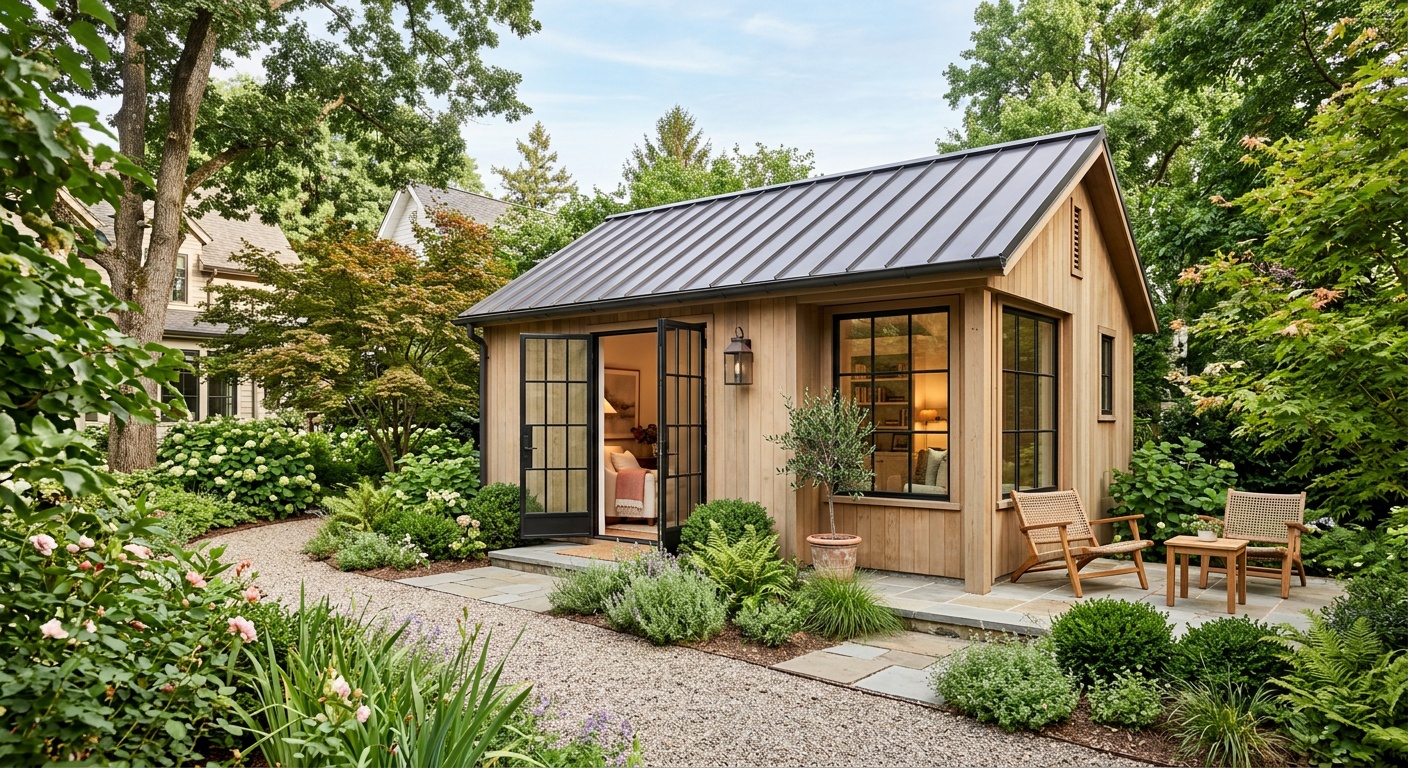
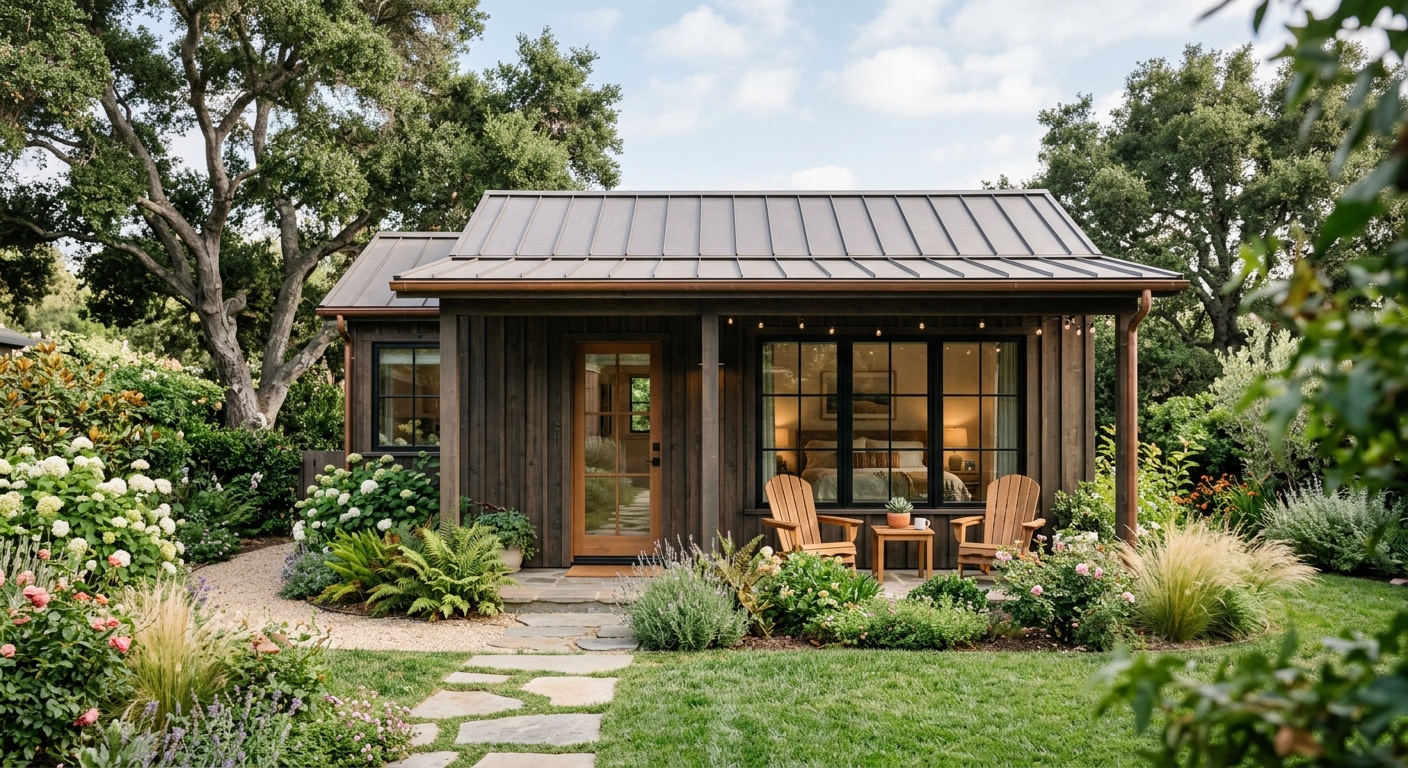
A Detached ADU — often called a DADU, backyard cottage, or carriage house — is a fully independent structure on the same lot as the primary home. It has its own foundation, walls, roof, and typically its own utility connections. It’s a home within a home’s property boundary.
The Real Advantages of Going Detached
Maximum privacy and independence. A detached unit feels like a real, separate home — because it is one. There’s no shared wall, no shared hallway, no accidental encounters at the laundry room. This privacy premium translates directly into rental income: according to Rentometer’s 2025 ADU Rental Data, detached ADUs rent for an average of 18% more per square foot than attached units of comparable size in the same zip code.
No disruption to your primary living space during construction. Building a detached structure in the backyard leaves your main home largely untouched. You’re not tearing out your garage floor or cutting through your basement walls. Most families can continue living normally throughout a DADU construction project.
Design freedom and quality. Starting with a blank lot means your architect or designer isn’t working around existing constraints. You can optimize ceiling heights, layout flow, natural light, and energy efficiency from scratch. Many modern DADUs are architectural gems that become selling points in their own right.
Stronger long-term asset value. The higher appraisal uplift noted above is not an anomaly — it reflects market reality. Buyers shopping for homes with ADUs in 2026 increasingly prioritize fully detached units because they offer more flexible use cases: rental income, multigenerational living, Airbnb, home office, or eventual separate sale in jurisdictions permitting lot splits.
Better for Airbnb and short-term rental strategies. In markets where short-term rentals are permitted, a detached ADU with its own entrance, parking, and private outdoor space commands dramatically higher nightly rates. AirDNA’s 2025 data shows detached ADUs in major metro areas averaging $142/night versus $89/night for attached units.
The Real Disadvantages of Going Detached
Higher upfront costs. This is the big one. A fully detached ADU requires a new foundation, independent utility connections (which can mean expensive trenching for sewer, water, and electrical lines), roofing, and exterior finishing. In high-cost markets like the Bay Area, Seattle, or New York, total DADU costs routinely exceed $300,000 to $400,000. Even in mid-cost markets, budget projections below $150,000 are rarely realistic in 2026.
More complex permitting and zoning hurdles. Despite widespread zoning reform, detached structures still face more scrutiny in many jurisdictions. Setback requirements, lot coverage maximums, height restrictions, and FAR (Floor Area Ratio) limits all apply more strictly to new freestanding buildings.
Loses existing amenities. Building a DADU in the backyard often means sacrificing outdoor living space, mature landscaping, a swimming pool, or garden areas. Homeowners frequently underestimate how much they’ll miss the yard they’re paving over.
Ongoing maintenance responsibilities are doubled. Two separate roofs. Two HVAC systems. Two sets of appliances. The operational complexity — and cost — of maintaining a fully detached structure is meaningfully higher than managing an attached unit that shares building systems with the primary home.
Side-by-Side Comparison: Key Metrics
| Metric | Attached ADU | Detached ADU |
|---|---|---|
| Average Build Cost (2026) | $95,000 – $175,000 | $130,000 – $350,000+ |
| Avg. Home Value Increase | ~12.8% | ~17.3% |
| Privacy Level | Moderate | High |
| Construction Disruption | Moderate to High | Low to Moderate |
| Rental Premium (per sq ft) | Baseline | +18% avg. premium |
Cost & ROI at a Glance: Data Visualization
The following chart compares key financial and performance indicators between attached and detached ADUs, expressed as a score out of 100 where higher indicates a more favorable outcome for that metric.
Real Homeowner Scenarios: 2 Case Studies
Case Study 1: The Chen Family in Portland — Attached ADU for Mom
In 2024, David and Mei Chen purchased a 1960s ranch home in Portland’s Sellwood neighborhood. Their primary motivation: Mei’s mother, who was 74, living alone in a condo across town and increasingly needing support. The property had an attached two-car garage on a lot with limited backyard space due to a protected tree easement.
The decision was effectively made by the lot: a detached unit wasn’t practical. Instead, they converted the garage into a 520-square-foot attached ADU with a private entrance, small kitchenette, accessible bathroom, and its own heating system. Total cost: $118,000, financed through a cash-out refinance at a rate that worked comfortably within their budget.
The outcome? Mei’s mother moved in six months after purchase. She has privacy when she wants it, proximity when she needs it, and the Chens have genuine peace of mind. David estimates they’ve avoided roughly $2,800/month in assisted living facility costs. “We didn’t build this to make money,” he says. “We built it to keep our family together while everyone keeps their dignity.”
Key takeaway: When lot constraints and family dynamics align, an attached ADU isn’t a compromise — it’s the right tool for the job.
Case Study 2: Marcus Williams in Austin — Detached ADU as Income Engine
Marcus purchased a 1970s bungalow in Austin’s 78704 zip code in late 2023 with a specific investment thesis: build a detached ADU for short-term rental income to subsidize his mortgage. After navigating Austin’s updated 2024 ADU ordinance — which expanded permitted ADU footprints to 1,100 sq ft and reduced setback requirements — he broke ground in spring 2025.
The resulting 750-square-foot detached cottage cost $198,000 to build, including landscaping, a private patio, and high-end finishes targeted at the short-term rental market. By Q3 2025, it was generating $3,100/month in Airbnb revenue on roughly 72% occupancy — well above what a long-term tenant would have paid.
Marcus projects a full construction payback in approximately 5.3 years at current occupancy rates. His home’s appraised value increased by $210,000 — essentially the full cost of construction — within 12 months. “I treat it like a small business,” he explains. “It requires effort and management, but the numbers are undeniable.”
Key takeaway: When income maximization is the primary goal and the lot supports it, a well-designed detached ADU in a strong rental market is a compelling investment.
Common Challenges and How to Overcome Them
Challenge 1: Financing the Build
The single biggest barrier homeowners report in 2026 is not zoning — it’s financing. Traditional construction loans can be cumbersome, and not every lender is ADU-literate. Here’s the practical playbook:
- Cash-out refinance works best if you’ve built substantial equity and current rates are workable. With home values elevated across most markets, many homeowners have more accessible equity than they realize.
- Home equity line of credit (HELOC) offers flexibility for phased construction. Draw what you need, when you need it.
- ADU-specific loan programs have expanded significantly. California’s ADU financing program through CalHFA, and similar state-level initiatives in Massachusetts and Colorado, offer below-market rates specifically for ADU construction.
- Renovation loans (FHA 203k, Fannie Mae HomeStyle) can bundle ADU construction into a purchase or refinance transaction — particularly useful for attached conversions.
Pro Tip: Get a preliminary appraisal with the proposed ADU included before committing to financing. Understanding the post-construction appraised value will clarify your equity position and potentially unlock better loan terms.
Challenge 2: Navigating Zoning and Permitting
Despite widespread reform, local zoning reality is still patchy. A state law permitting ADUs doesn’t automatically override every local quirk. Common obstacles include:
- Owner-occupancy requirements (being phased out in many states, but still present in some)
- Utility connection fees that can add $15,000 to $40,000 to detached ADU costs
- Architectural review in historic districts
- HOA restrictions that state law may or may not override (jurisdiction-specific)
The fix: hire a local ADU specialist or architect before you design anything. In 2026, most mid-to-large metro areas have specialists who handle dozens of ADU permits annually. Their fee pays for itself in avoided mistakes, accelerated approvals, and designs that comply from day one.
Challenge 3: Managing the Tenant Relationship When You’re the Neighbor
Living next to — or attached to — your tenant creates dynamics that off-site landlords never face. Boundaries blur. Maintenance requests become personal. Noise and parking become relationship issues rather than lease issues.
The practical solution involves three disciplines: excellent lease documentation (include noise policies, parking assignments, guest restrictions, and maintenance responsibilities explicitly); professional distance (communicate in writing, use a property management app even for a single unit); and thoughtful design (separate entrances, sound insulation, and visual screening go a long way toward making the arrangement feel comfortable for everyone).
Frequently Asked Questions
Does an ADU increase property taxes, and by how much?
Yes — adding an ADU triggers a reassessment in most jurisdictions, which will increase your property tax bill. The magnitude varies significantly by location. In California, Proposition 19 and ADU-specific rules mean the reassessment is typically limited to the value added by the new construction rather than a full property reassessment. In a typical mid-cost market, homeowners adding a $150,000 ADU might see property taxes increase by $1,500 to $2,500 annually — a cost that’s usually more than offset by rental income or reduced housing costs for family members. Always consult your county assessor’s office or a local property tax professional before making final budget projections.
Can I build a detached ADU if my lot is small?
Lot size is a genuine constraint for detached ADUs, but the thresholds may be more flexible than you think following recent zoning reforms. As of 2026, many California cities permit detached ADUs up to 800 square feet regardless of lot coverage maximums — meaning even a 4,000-square-foot lot could support a small DADU. Key factors to evaluate: minimum setback requirements (typically 4 feet from rear and side property lines), lot coverage limits (often 40-50% of total lot area), and any utility easements. A site analysis from a local architect — often available for $300-$600 — will give you a definitive answer based on your specific parcel.
Which ADU type is better for resale value when I sell my home?
Detached ADUs generally produce stronger resale performance in most markets, as supported by the 17.3% vs. 12.8% value uplift data cited earlier. However, this isn’t universal. In urban markets with land constraints, a well-designed attached ADU — particularly a fully permitted basement apartment with a separate entrance — can be highly attractive to buyers who want rental income without the maintenance burden of a separate structure. The quality of the ADU matters as much as the type: a poorly finished detached cottage won’t outperform a beautifully renovated attached unit. Focus on building permits, quality finishes, and genuine livability regardless of which type you choose.
Your ADU Decision Roadmap: Making the Right Call
You’ve absorbed a lot of information. Let’s convert it into a clear, actionable path forward. Here’s how to move from consideration to confident decision:
- Clarify your primary goal first. Maximum rental income? Multigenerational living? Long-term asset appreciation? Short-term rental strategy? Your goal filters almost every subsequent decision. Write it down. Resist the temptation to optimize for everything simultaneously.
- Commission a site analysis before you commit to a type. Have a local ADU architect or specialist review your lot, zoning designation, setbacks, and utility connections. This $300–$600 investment prevents the costly mistake of designing the wrong type of ADU for your specific parcel.
- Run realistic numbers with a financial advisor or lender. Don’t rely on back-of-envelope ROI calculations. Model the full cost (construction, financing, permits, landscaping, ongoing maintenance), realistic income projections based on actual comparable rentals in your zip code, and the tax implications.
- Interview at least three ADU-specialist contractors. ADU construction is a distinct skill set. Verify permits pulled, check references from completed projects, and get fixed-price bids rather than time-and-materials estimates wherever possible.
- Plan for the relationship, not just the structure. Whether it’s a tenant or a family member, think carefully about how the physical design will support a healthy long-term arrangement. Privacy features, separate utilities, and clear lease agreements aren’t afterthoughts — they’re foundational.
The ADU revolution of the mid-2020s has handed homeowners an extraordinary tool for building wealth, supporting family, and improving housing supply in their communities. As lot splits become more accessible, as ADU financing matures, and as buyer demand for homes-with-ADUs continues to outpace supply through 2027 and beyond, the decision you make today will ripple through your financial life for decades.
So here’s the question worth sitting with: What does your property make possible — and what does your life actually need? The best ADU isn’t the most expensive one, or the most impressive one on paper. It’s the one built intentionally, for the right reasons, on a foundation of clear thinking and honest self-knowledge. Start there, and you’ll build something genuinely worth having.