Annual Home Maintenance Checklist Every Homeowner Should Follow
Reading time: 14 minutes
Ever walked through your home and felt a quiet anxiety about everything that might be quietly failing behind your walls, beneath your floors, or above your ceiling? You’re not alone. Most homeowners operate in a reactive mode — fixing things only after they break — and it costs them dearly. In 2026, the average emergency home repair bill sits at approximately $3,800, while a consistent preventive maintenance routine costs the typical homeowner just $1,200 to $1,500 annually. That’s a significant financial gap you can close with a structured plan.
Think of your home the way a pilot thinks about an aircraft: no self-respecting pilot takes off without a pre-flight checklist. Your home deserves the same disciplined attention. Whether you’re a first-time homeowner nervously poking at your HVAC filter or a seasoned property veteran who’s seen it all, this guide is your definitive, season-by-season roadmap to keeping your home safe, efficient, and high in value.
Here’s the straight talk: Home maintenance isn’t glamorous. But it’s one of the most financially intelligent habits you can build. Let’s turn your home from a source of stress into a well-oiled, value-generating asset.
Table of Contents
- Why Annual Maintenance Is a Financial Game-Changer
- Spring Checklist: Wake Your Home Up Right
- Summer Checklist: Performance Under Pressure
- Fall Checklist: The Most Critical Season
- Winter Checklist: Defense Mode
- Year-Round Tasks You Can’t Afford to Skip
- 3 Common Challenges Homeowners Face (And How to Beat Them)
- Maintenance Cost Comparison Table
- Repair Cost Impact Chart
- Frequently Asked Questions
- Your Home Maintenance Action Plan
Why Annual Maintenance Is a Financial Game-Changer
Let’s start with a scenario. Meet Sarah and Marcus, a couple who bought their first home in suburban Columbus, Ohio in 2022. For three years, they skipped routine maintenance — no gutter cleaning, no HVAC servicing, no roof inspections. By the spring of 2025, they faced a perfect storm: a clogged gutter had caused water to seep behind their fascia boards, leading to wood rot. Simultaneously, their furnace — never serviced — failed in January. Their total repair bill? Just over $9,200. All of it preventable.
Contrast that with their neighbors, the Hendersons, who follow a disciplined seasonal checklist. In 2025, they spent $1,340 on preventive maintenance — HVAC tune-ups, gutter cleanings, a roof inspection, caulking around windows. Their home’s appraised value increased by 4.2% that year, partly attributed to its documented maintenance history when they refinanced.
According to the National Association of Realtors’ 2025 Home Maintenance Report, homes with documented maintenance histories sell for an average of 7-10% more than comparable unmaintained properties. Additionally, Harvard’s Joint Center for Housing Studies found in 2025 that homeowners who invest 1-2% of their home’s value annually in maintenance preserve significantly more equity over a 10-year period.
The math is simple. The discipline is the hard part. Let’s build that discipline together, season by season.
Spring Checklist: Wake Your Home Up Right
Spring is your home’s annual performance review. Winter is harsh — it contracts materials, traps moisture, and puts stress on nearly every system. As temperatures rise in March through May, your job is to assess the damage and set your home up for success.
Exterior Spring Tasks
- Inspect the roof: Look for missing, cracked, or curling shingles. Check flashing around chimneys and vents. In 2026, a professional roof inspection averages $200-$350 — far less than a leak repair averaging $1,500+.
- Clean and inspect gutters and downspouts: Remove winter debris. Ensure downspouts direct water at least 6 feet from your foundation. Clogged gutters are one of the top three causes of basement flooding.
- Check the foundation: Walk the perimeter and look for new cracks (hairline cracks are common; horizontal cracks signal structural issues requiring immediate professional assessment).
- Service your lawn irrigation system: Turn it on gradually, check for broken heads, and recalibrate timers after winter shutdown.
- Inspect deck and patio: Look for rot, loose boards, or deteriorating sealant. Re-seal wood decks every 2-3 years.
- Window and door caulking: Probe old caulk with a screwdriver. If it crumbles or has pulled away from the surface, reapply. This directly impacts your energy bill.
Interior Spring Tasks
- HVAC system service: Schedule a professional tune-up before summer heat arrives. Replace air filters (every 90 days for standard filters, every 30 days for homes with pets or allergy sufferers).
- Test smoke and carbon monoxide detectors: Replace batteries. Note: In 2026, most modern detectors have 10-year sealed battery units — check your model’s expiration date.
- Check water heater: Flush sediment from the tank (connect a hose to the drain valve and release 2-3 gallons). Inspect the anode rod every 3-5 years.
- Inspect attic for moisture or pest evidence: Winter can create condensation issues. Look for dark staining on rafters or insulation compression.
- Deep clean dryer vents: Lint buildup in dryer vents is responsible for approximately 15,000 house fires annually in the U.S. A $50 cleaning kit or a $100 professional service is money extremely well spent.
Pro Tip: Create a spring maintenance weekend — block two Saturdays on your calendar in April. The first for exterior tasks, the second for interior. Make it routine and it stops feeling like a burden.
Summer Checklist: Performance Under Pressure
Summer puts your cooling systems and exterior surfaces to the test. Heat causes expansion in materials, UV exposure degrades surfaces, and heavy summer storms test your drainage and roofing systems.
Cooling and Comfort Systems
- Check air conditioner performance: After your spring service, monitor whether your AC is cooling efficiently. A well-maintained central AC system should maintain a 15-20°F differential between indoor and outdoor temperatures.
- Clean refrigerator coils: Dusty coils make your refrigerator work 25-30% harder, shortening its lifespan. Pull the fridge out and vacuum the coils on the back or bottom.
- Inspect and clean ceiling fans: Ensure they rotate counterclockwise in summer (pushing cool air down). Dust buildup reduces efficiency and can cause wobbling.
- Check window screens: Repair any tears. A torn screen isn’t just cosmetic — it allows insects inside and reduces the effectiveness of natural ventilation.
Exterior Summer Tasks
- Inspect exterior paint and siding: Look for bubbling, peeling, or fading. Bare wood exposed to summer UV can deteriorate rapidly and create entry points for moisture.
- Check sprinkler efficiency: Water your lawn early in the morning (5-9 AM) to minimize evaporation. Adjust irrigation heads to avoid watering sidewalks or driveways.
- Trim trees and shrubs near the house: Branches within 10 feet of your roof create pathways for pests and can cause damage in summer storms. This is especially relevant in storm-prone regions.
- Inspect and clean outdoor furniture and grills: Grease buildup in grills is a fire hazard. Give your grill a thorough cleaning mid-season.
Quick scenario: Imagine it’s July 2026 and your AC fails during a heat wave. The average wait time for emergency HVAC service in 2026 is 3-5 days in many markets due to high demand. A spring tune-up significantly reduces that risk — and often catches failing capacitors or refrigerant issues before they become full system failures.
Fall Checklist: The Most Critical Season
If you could only pick one season to perform maintenance, make it fall. Preparing your home before winter is the single most impactful maintenance window of the year. Think of it as winterizing your ship before a storm.
Heating System Preparation
- Service your furnace or heat pump: Schedule a professional inspection in September or early October — before demand surges. A technician will check heat exchangers for cracks (critical: a cracked heat exchanger leaks carbon monoxide), test ignition systems, and ensure efficiency.
- Bleed radiators (if applicable): For homes with hot-water radiators, bleeding trapped air ensures even heat distribution.
- Inspect and clean chimney and fireplace: The Chimney Safety Institute of America recommends annual chimney inspections. Creosote buildup is a leading cause of chimney fires. A Level 1 inspection costs approximately $100-$250 in 2026.
- Check weatherstripping on all exterior doors: Slide a piece of paper under each door. If it slides easily with the door closed, your weatherstripping needs replacement — a $20-$40 DIY fix that can save $100+ annually in heating costs.
- Reverse ceiling fan direction: Switch fans to clockwise rotation at low speed to push warm air down from the ceiling.
Exterior Winterization Tasks
- Clean gutters after leaf fall: Do this in late November. Clogged gutters lead to ice dams in cold climates — ice dams cause an average of $6,000-$10,000 in damage when water backs up under shingles.
- Shut off and drain exterior faucets: Disconnect garden hoses and use interior shut-off valves for outdoor spigots. A frozen pipe burst costs an average of $5,000-$20,000 to repair.
- Inspect and repair driveway and walkways: Fill cracks with appropriate sealant. Water in cracks freezes, expands, and turns small issues into major cracking by spring.
- Store or winterize lawn equipment: Drain fuel from gas-powered mowers and trimmers before storage to prevent carburetor damage.
- Test your generator: If you own a backup generator, run it for 20 minutes under load before winter storms arrive. Check oil levels and replace spark plugs if needed.
Winter Checklist: Defense Mode
Winter maintenance is less about major projects and more about vigilance. Your goal is to monitor, prevent, and respond quickly to developing issues.
- Monitor for ice dams: After heavy snowfall, safely remove excess snow from your roof edge using a roof rake (available for $30-$80). Never use a standard ladder on an icy roof.
- Keep cabinet doors open during extreme cold: If temperatures drop below 20°F, open kitchen and bathroom cabinet doors to allow warm air to circulate around pipes under sinks on exterior walls.
- Check attic insulation and ventilation: A well-insulated attic maintains proper temperature balance, preventing ice dam formation and reducing heating costs. The Department of Energy recommends R-49 to R-60 insulation for attics in most U.S. climate zones.
- Test sump pump: Pour water into the sump pit to ensure the pump activates. Winter thaw events can trigger basement flooding if your sump pump fails.
- Check for drafts and cold spots: Use a lit incense stick near windows and doors on a windy day. Drifting smoke reveals air infiltration points. Address with temporary weather-seal tape if necessary.
- Keep emergency supplies stocked: Flashlights, backup batteries, water, and a basic plumbing kit (pipe repair tape, shut-off key) can make the difference in a winter emergency.
Year-Round Tasks You Can’t Afford to Skip
Some maintenance tasks don’t belong to a single season — they require consistent monthly or quarterly attention. These are the habits that separate thoughtful homeowners from reactive ones.
- Replace HVAC filters: Every 1-3 months depending on your filter type and household. A dirty filter reduces system efficiency by up to 15% and strains the motor.
- Check and test GFCIs: Press the “test” button on Ground Fault Circuit Interrupter outlets in bathrooms, kitchens, and garages monthly. These save lives.
- Inspect under sinks for leaks: Monthly visual inspection takes 60 seconds and can catch slow leaks before they cause mold or structural damage.
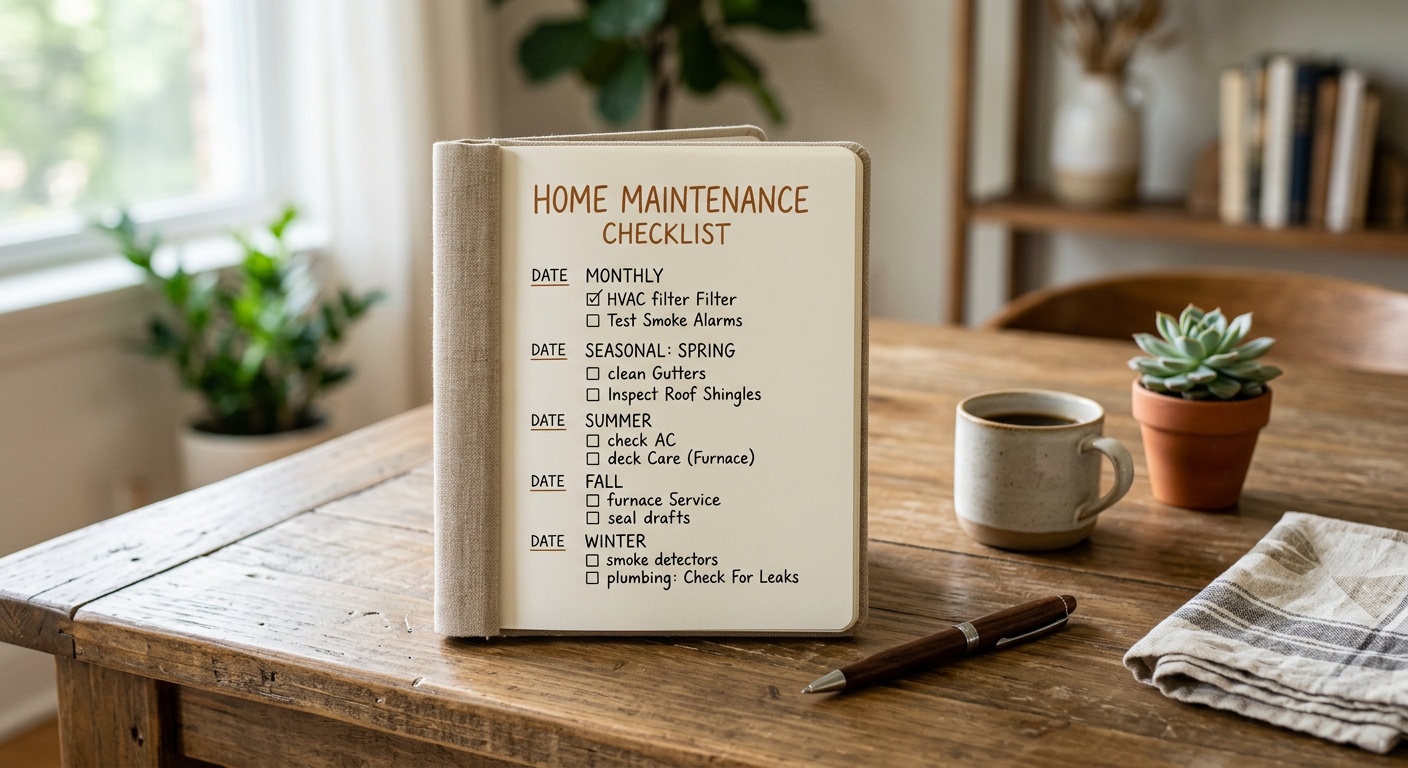
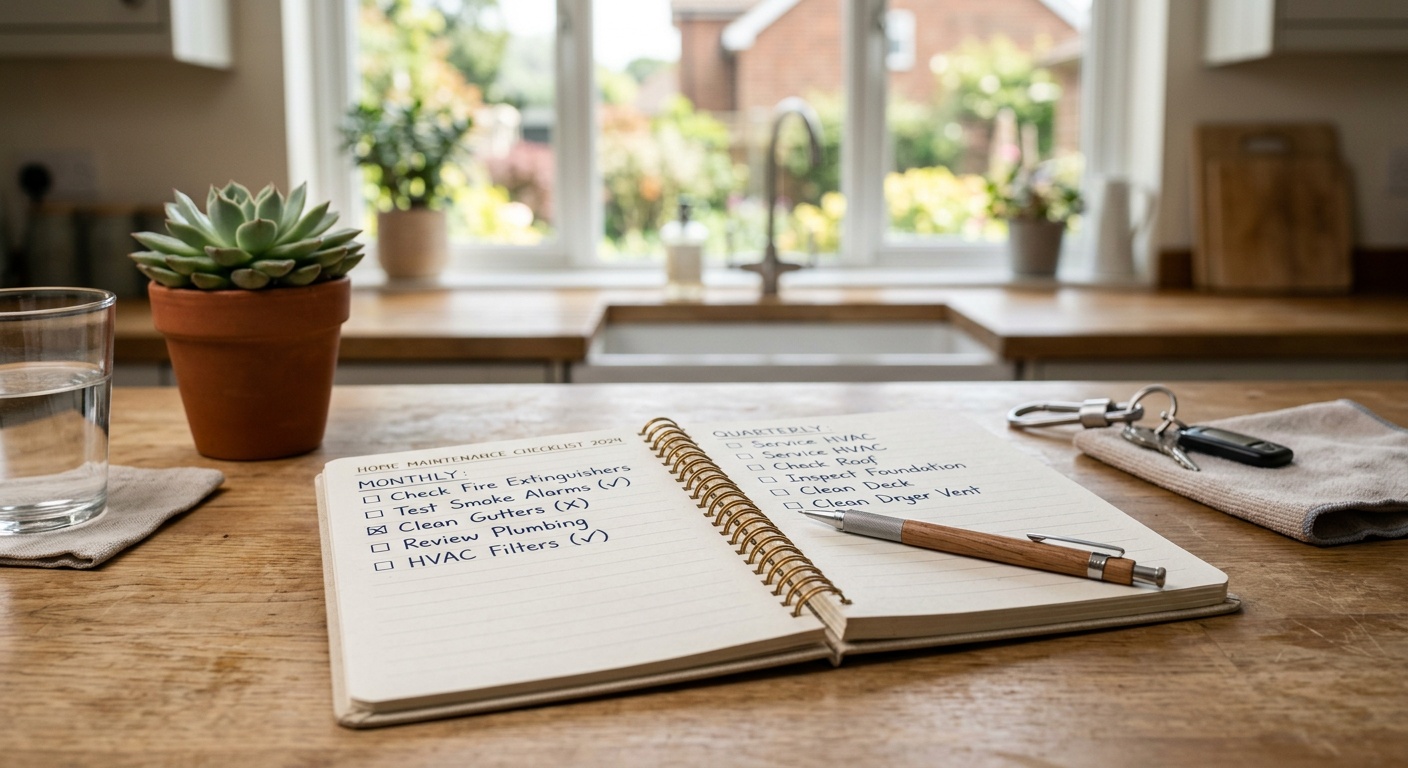
- Keep a maintenance log: Record every service, inspection, repair, and upgrade with dates and costs. This documentation is invaluable at resale and for insurance claims.
- Service garage door: Lubricate rollers, hinges, and springs quarterly with garage door lubricant (not WD-40). Test the auto-reverse safety feature by placing a 2×4 on the ground — the door should reverse when it contacts the board.
3 Common Challenges Homeowners Face (And How to Beat Them)
Challenge 1: Finding Time for Maintenance
The most common obstacle isn’t money — it’s time. Between work, family, and life, maintenance gets perpetually postponed. The solution: Batch your tasks into four seasonal maintenance weekends per year. Use a digital calendar reminder that repeats annually. Apps like HomeZada or Centriq (both updated significantly in 2025-2026) can auto-schedule reminders and track your home’s specific systems and appliances. Think of it this way: 16 hours per year of proactive maintenance prevents 80+ hours of reactive crisis management.
Challenge 2: Knowing When to DIY vs. Hire a Pro
Overconfidence leads to expensive mistakes. A homeowner in Portland, Oregon recently attempted a DIY HVAC repair in 2025, voiding his system warranty and causing a refrigerant leak — a repair that cost $1,800 more than the original professional service would have. The rule of thumb: Anything involving electricity beyond outlet replacement, gas lines, structural elements, or roofing beyond simple shingle replacement should be left to licensed professionals. DIY is excellent for caulking, painting, filter replacement, gutter cleaning, and minor plumbing like fixture replacement.
Challenge 3: Budget Constraints
Maintenance competes with other priorities. The strategic approach: Follow the 1% rule — set aside 1-2% of your home’s value annually for maintenance. For a $350,000 home, that’s $3,500-$7,000 per year. Open a dedicated high-yield savings account and auto-transfer a monthly amount. This prevents the painful scramble when a major repair arrives. Additionally, prioritize tasks by risk: water intrusion and HVAC are top-tier priorities; cosmetic issues can wait.
Maintenance Cost Comparison Table
| Task | Preventive Cost (2026) | Reactive Repair Cost | Frequency | Risk if Skipped |
|---|---|---|---|---|
| HVAC Tune-Up | $150–$250 | $2,500–$8,000 (replacement) | Annual | High |
| Gutter Cleaning | $100–$250 | $3,000–$10,000 (water damage) | 2x per year | High |
| Chimney Inspection | $150–$250 | $5,000–$30,000+ (fire damage) | Annual | Critical |
| Roof Inspection | $200–$350 | $8,000–$25,000 (full replacement) | Annual | High |
| Dryer Vent Cleaning | $50–$150 | $20,000+ (fire damage) | Annual | Critical |
Repair Cost Impact: Preventive vs. Reactive (Average Costs)
Average Annual Savings from Preventive Maintenance by System (2026 Data)
Bar widths represent relative risk exposure. Values reflect difference between reactive repair costs and preventive costs.
Frequently Asked Questions
How much should I budget annually for home maintenance in 2026?
Financial advisors and home maintenance experts generally recommend budgeting 1-2% of your home’s purchase price annually. For a $400,000 home, that means setting aside $4,000-$8,000 per year. Older homes (20+ years) or those in extreme-climate regions should lean toward the higher end. In 2026, labor costs for skilled tradespeople have risen approximately 8-12% compared to 2023 levels, making preventive maintenance even more cost-effective relative to emergency service rates.
What are the most overlooked home maintenance tasks?
The most frequently skipped tasks according to a 2025 HomeAdvisor National Survey are: dryer vent cleaning (skipped by 68% of homeowners), water heater flushing (skipped by 71%), chimney inspection (skipped by 60%), and attic ventilation checks (skipped by 74%). These are also, not coincidentally, among the highest-consequence items when neglected. Start here if you’re behind on your checklist.
Can I do my own home maintenance or should I always hire professionals?
Both approaches have a place in a smart homeowner’s strategy. DIY is highly appropriate for: filter replacements, caulking, gutter cleaning, painting, minor plumbing fixture replacements, and weatherstripping. Always hire licensed professionals for: electrical work beyond basic switches, gas line work, HVAC refrigerant handling, structural repairs, and roof work beyond minor shingle patching. A helpful rule in 2026: if a task requires a permit in your municipality, requires specialized tools you don’t own, or has serious safety implications (gas, electricity, structural), hire a pro. The liability and safety risks of amateur work in these areas far exceed the cost of professional service.
Your Home Maintenance Action Plan: Start This Weekend
Here’s the reality: the gap between homeowners who build wealth through real estate and those who see their home drain their finances often comes down to this single discipline — consistent, seasonal maintenance. In 2026, with construction costs elevated, tradespeople in high demand, and home values representing an increasingly large portion of household net worth, neglect is more expensive than it’s ever been.
You don’t need to tackle everything at once. Here are your 5 immediate next steps to set your maintenance system in motion:
- Audit your current status this week: Walk through each area of your home with this article as your guide. Note what’s overdue. Be honest — the list might be long, and that’s okay.
- Create four calendar blocks right now: Label them “Spring Maintenance Weekend,” “Summer Check,” “Fall Winterization,” and “Winter Monitor.” Set them to repeat annually.
- Open a dedicated maintenance savings account: Calculate 1.5% of your home’s value and divide by 12. Set that amount to auto-transfer monthly.
- Build your contractor list before you need it: Research and save contacts for a licensed HVAC technician, plumber, electrician, and roofer in your area. Finding trusted contractors in a non-emergency situation is infinitely easier — and less expensive — than calling around in crisis mode.
- Start your maintenance log today: Whether it’s a spreadsheet, a notes app, or a dedicated tool like HomeZada, begin documenting every repair and service from this point forward. Your future self — and future buyer — will thank you.
Home maintenance is ultimately an act of stewardship. Your home is likely your largest single asset, a sanctuary for your family, and a legacy you’re building. The broader trend is clear: in a 2026 housing market where affordability challenges have made homeownership harder to attain, protecting the home you have is more important than ever. Well-maintained homes outlast the market cycles, hold their value through downturns, and provide owners with security that no amount of financial anxiety can replace.
So here’s the question to sit with: If you treated your home with the same intentionality you give to your most important professional or personal commitments, what would change — and what would it be worth to you over the next decade?